
Power Quality: When the Problem Is Not a Power Outage
Continuity of electrical supply is only one aspect of a facility’s reliability. Equally important is the quality of the electrical power reaching the equipment. A business may experience no complete outages and still face unexplained trips, overheating, automation malfunctions or problems with electronic equipment.
Not all disturbances are the same
Power quality problems include different electrical phenomena: harmonics, voltage sags or swells, transients, imbalance, voltage fluctuations and low power factor. Their significance depends on the installation and the loads it serves.
Modern electronic equipment, variable frequency drives, rectifiers, servers and other non-linear loads can contribute to harmonic generation and can also be affected by grid disturbances.
Measure first, then select the solution
The same symptom does not necessarily lead to the same technical solution. An unwanted machine shutdown may be related to a voltage sag, harmonic distortion, resonance, overload or another cause. For this reason, a mature approach to Power Quality begins with recording and analysing the actual electrical conditions of the installation.
There is no single device that solves every power quality problem. Depending on the diagnosis, a different approach may be required: an active harmonic filter, reactive power compensation, voltage stabilisation, a UPS or a combination of technologies.
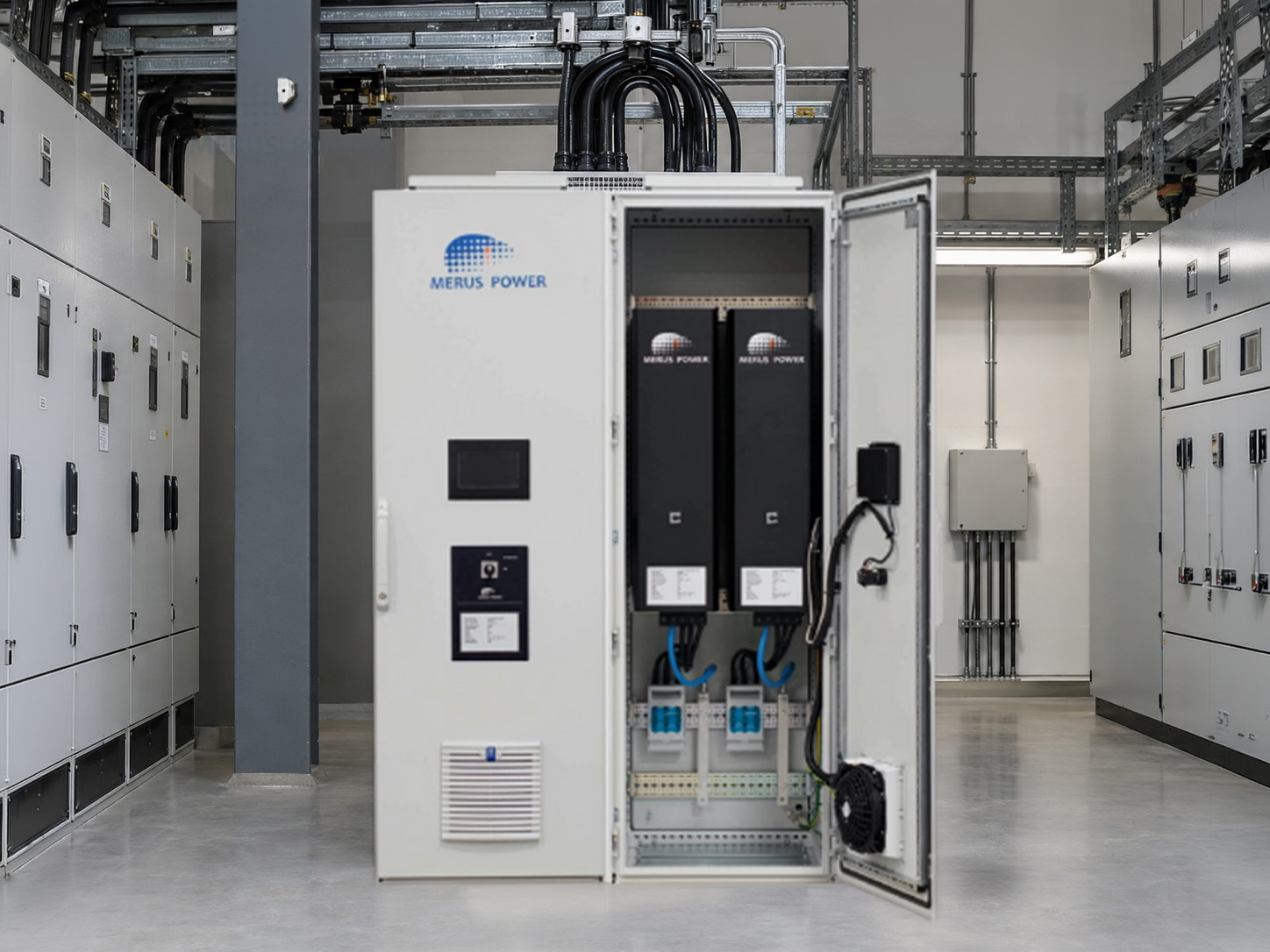

When measurement reveals the actual problem
The same approach has been applied in an ACE Power Electronics project for a plastics manufacturing facility. Before the intervention, more than 68,000 resonance events had been recorded, while total harmonic current distortion, THDi, was at 9–12%, with peaks of 15%.
Following the study and the installation of an active harmonic filter and compensation system, measurements showed THDi at 2.5%, while the previous resonance events were no longer recorded during system operation.
The significance of this example is not that an active filter is the answer to every power quality problem, but that it demonstrates the correct sequence: measurement, diagnosis, technical solution, new measurement and verification of the result.
When the investment targets the actual cause of the problem
The value of a Power Quality assessment is that a recurring electrical problem is no longer addressed on the basis of assumptions. Measurement can identify which disturbance is present, where it occurs and what impact it has on equipment and facility operation.
The investment can therefore be directed at the actual cause of the problem, and the result can subsequently be verified through new measurements.
Case Studies & Insights

What Should Be Checked Before a Critical Power System Is Handed Over?
UPS and Energy Storage: Where They Converge – and Where They Do Not
Emergency Lighting: It Must Work at the Critical Moment
Energy Storage for Businesses: New Developments in the Greek Market
Press Releases
Partnership with ION

Partnership with ATHINAION Cinemas
Award at the 2nd ICAP CRIF ESG Summit